
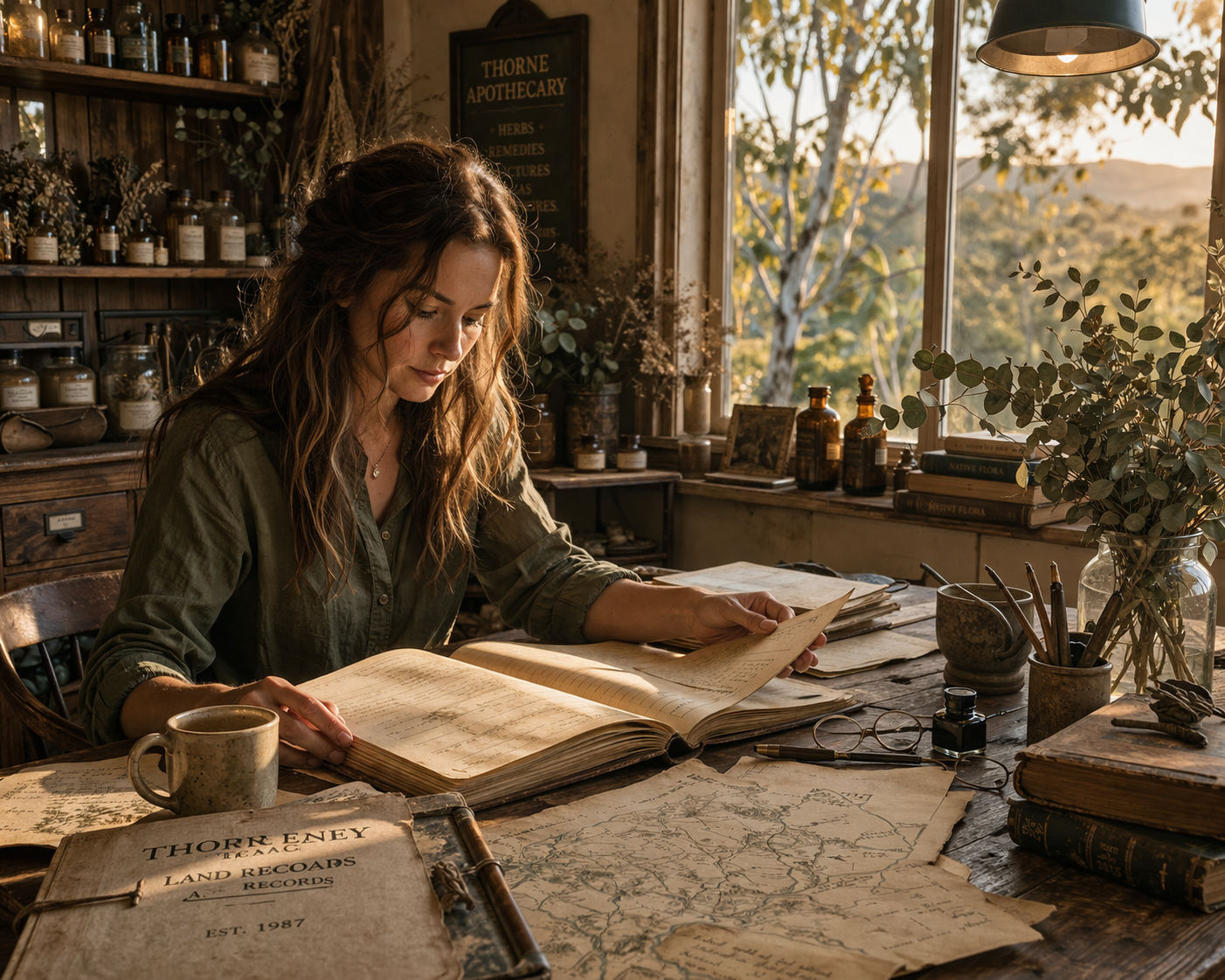
The Eucalyptus Door: Character Page
The Woman Who Returned to the Land… and Found Herself
Basic Character Overview
Full Name: Isla Thorne
Age: Late 30s to Early 40s
Occupation: Owner of Thorne Apothecary
Location: Rural Australian Eucalyptus Valley
Personality: Quiet, observant, thoughtful, resilient
Role in Story: Protagonist — Returning Healer
Who Isla Thorne Is
Isla Thorne returns to the eucalyptus valley carrying grief, uncertainty, and a life that no longer feels like her own.
After her father’s passing, she inherits Thorne Apothecary, a small rural shop nestled among eucalyptus trees, a place she hasn’t visited in years.

At first, she feels:
• Disconnected
• Unsure
• Out of place
But slowly, through:
• The land
• The grove
• The community
• Quinn
• Aunty Kiri
She begins to rediscover:
• Belonging
• Purpose
• Quiet strength
• Healing
Isla’s journey is gentle, steady, and deeply rooted in place.
Isla’s Symbolic Object
Her Father’s Ledger

Isla’s most meaningful object is her father’s land ledger.
Inside the worn pages she finds:
• Handwritten notes about rainfall
• Observations about the eucalyptus grove
• Names of families he helped
• Quiet reflections about stewardship
The ledger becomes:
• A bridge between past and present
• A guide for her decisions
• A symbol of inheritance beyond land
• A reminder that care is passed forward
Over time, Isla begins adding her own notes, continuing the legacy.
Living Well According to Isla
Living well, according to Isla, is not about achievement.
It is about presence.
Living Well According to Isla
• Walk slowly through the trees
• Listen before deciding
• Keep handwritten notes
• Make tea before difficult conversations
• Let silence be part of healing
• Care for land as you would family
• Allow relationships to grow naturally
• Leave room for quiet mornings
• Return what you take
• Choose gentleness when possible
Isla learns that living well is not complicated, it is simply rooted.
Isla’s Journey
At the Beginning
• Returns reluctantly
• Feels uncertain about staying
• Considers selling the apothecary
• Feels disconnected from the land and community
Midway Through
• Learns from Aunty Kiri
• Begins helping community members
• Connects deeply with the eucalyptus grove
• Develops a quiet bond with Quinn
• Begins restoring the apothecary
By the End
• Chooses to stay
• Restores Thorne Apothecary
• Helps create a community healing space
• Finds belonging and purpose
• Embraces quiet love and partnership
Isla and Quinn

Quinn becomes:
• Quiet support
• Grounded presence
• Protector of the land
• Gentle romantic interest
Their relationship builds through:
• Shared silence
• Land restoration
• Community gatherings
• Walking the grove together
• Mutual trust
Their connection grows slowly and naturally, like the grove itself.
Isla and Aunty Kiri

Aunty Kiri becomes:
• Guide
• Teacher
• Elder
• Keeper of land stories
She helps Isla understand:
• The land’s memory
• The meaning of belonging
• The responsibility of healing
• The importance of listening
Through Aunty Kiri, Isla learns that healing comes from both the land and community.
Isla’s Favorite Quote
“The land does not ask us to be perfect, only to listen, to care, and to return what we can with gentle hands.”

From the Author
Why I Wrote Isla Thorne
Isla’s story is deeply personal.
She was inspired by my own father, his quiet strength, his tenderness, and his deep respect for the land.
Throughout my life, I watched him:
• Care for land patiently
• Notice small seasonal changes
• Protect what mattered quietly
• Work without needing recognition
• Understand stewardship as responsibility
He didn’t speak loudly about these things. He simply lived them.
That quiet care shaped how I see:
• Land
• Healing
• Responsibility
• Legacy
Isla’s Father carried this same spirit, and now so does she.
Her father’s presence in the story reflects:
• Tender care
• Quiet leadership
• Land stewardship
• Generational wisdom
Writing Isla allowed me to honor that influence, and the gentle ways fathers teach us, often without words.