
Practical preparedness without panic
There is a lot of noise around food storage. Whether that is long supply lists, extreme scenarios, expensive gear, or even the pressure to do everything at once.
After forty years of preparing for my family, I have learned something simple:
Most of the panic and fear, is unnecessary.
What actually matters is far more practical, and far more doable, than people think.
Preparedness is not about building a bunker. It is about building stability.
1. Start With the Foods You Already Eat
The biggest mistake families make is storing foods they don’t use. If your family doesn’t eat lentils now, don’t begin with 100 pounds of lentils. Food storage works best when it mirrors your real kitchen. And then we will get into the other storage of longer term items.
Ask:
- What do we eat weekly?
- What do we cook comfortably?
- What ingredients form the base of most meals?
Store more of those.
Rotation becomes easy.
Waste becomes minimal.
Stress decreases.
Preparedness should feel like an extension of daily life, not a separate project.

2. Focus on the Core Staples
Over the years, I’ve come back again and again to the basics.
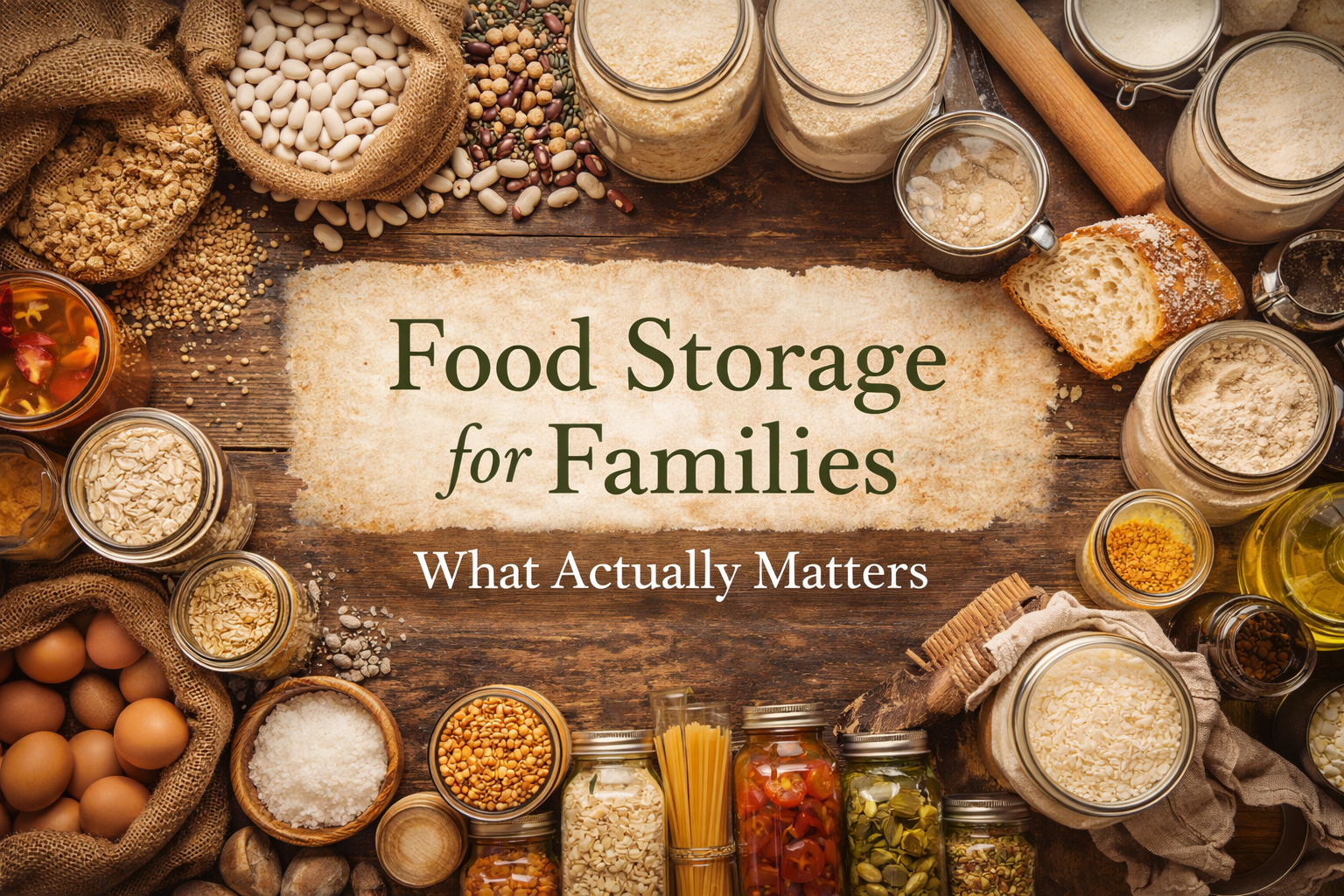
The foods that matter most for your long-term staples are:
- Beans
- Grains (wheat, rice, oats)
- Fats (oil, lard, coconut oil)
- Salt
- Sugar
- Yeast or sourdough starter
- Simple spices
These are not dramatic. They are foundational. They are foods that will sustain life, and can even make it more comfortable if you know a few things to use them for.
From these ingredients, you can make:

- Bread
- Soup
- Porridge
- Flatbreads
- Simple desserts
- Protein-rich meals
- Comfort food
When the core is strong, everything else is flexible.
3. Water Matters More Than Fancy Foods
Before specialty items. Before freeze-dried meals. Before elaborate storage systems.
Secure water. This can be secured in many ways. Filtrations. Flats of bottles. Jugs of water that fit on a water cooler. Or even bigger like 50 gallon drums or larger. It looks different for everyone.
Clean drinking water and a simple plan for storing or filtering it is more important than nearly anything else.
Food matters.
Water sustains.
4. Storage Should Match Your Budget and Space
Preparedness built on debt is not preparedness. It is pressure. This is exactly why the 52 Week Preparedness Plan is perfect. It helps you budget by giving you exact lists every week you should prep or purchase.
However, if that is too much, I recommend you watch sales and build slowly as items are reduced:
- One extra bag of rice at a time
- One extra case of canned goods
- One extra gallon of oil
If you add just a few extra items each week, your pantry grows steadily without strain.
Slow growth is sustainable growth.
5. Learn the Skills Alongside the Supplies
Food storage without skill creates anxiety. Skill without supplies creates vulnerability.
They must grow together. You must have the core storage items, sooner than later, and you must know how to use them.

Learn to:
- Bake bread weekly
- Cook dry beans confidently
- Make simple soups
- Stretch leftovers
- Use flour in multiple ways
When you practice now, you are not guessing later. Let it become second nature to your household.
6. Rotate What You Store
A well-stocked pantry should not sit untouched. It should breathe. Cans that sit for years, may still be good, but they will taste tinnie. Things go stale. Things go rancid. Rotation is the key to a healthy food storage.
Use older items first.
Replace what you use.
Keep expiration dates visible.
This keeps food fresh and prevents waste. Preparedness is not about hoarding. We don’t want to do that.
It is about rhythm. The in’s and out’s of storage, cooking, and life.
7. Don’t Neglect Comfort
Food storage is not only about calories. It is about morale.
Include:
- Tea or coffee
- Baking ingredients
- A favorite spice
- Something sweet
In stressful seasons, small comforts matter.
8. Keep It Calm
You do not need to prepare for every scenario. You need to prepare for likely disruptions:
- Short-term supply shortages
- Severe weather
- Temporary income gaps
- Transportation interruptions
Food storage is not about predicting disaster. It is about reducing vulnerability.
When your pantry is stocked, your decisions are not rushed.
9. Think in Months, Not Apocalyptic Years
Start with:
- One week
- Then two
- Then one month
- Then three months
Incremental goals are achievable.
And confidence builds with each milestone.
10. Preparedness Is Peace of Mind
The greatest benefit of food storage is not the food itself.
It is the calm it creates.
When shelves are steady:
- Anxiety lowers.
- Impulse spending decreases.
- News cycles lose their grip.
- You move more thoughtfully.
Preparedness is quiet strength.
What Actually Matters
After decades of watching markets rise and fall, storms come and go, and supply chains tighten and loosen, I have learned:
You do not need extreme measures.
You need:
- Basic staples
- Clean water
- Simple skills
- Slow consistency
- Emotional steadiness
That is enough.
If You Want a Practical Path
If you would like a structured, step-by-step approach that builds your pantry calmly over time, explore:
👉 Preparedness Works
(links coming soon)
Or begin with:
📖 The 52-Week Preparedness Planner
A steady, undated guide to building food security one week at a time.
Watch for this link to download the eBook coming soon here on this site.